 We want to share a legislative update focused on two important fronts for our business community: recent federal advocacy work in Washington, DC, and what to expect as Oregon enters the 2026 Legislative Short Session.
Federal Advocacy: Advancing Transportation and Infrastructure Priorities
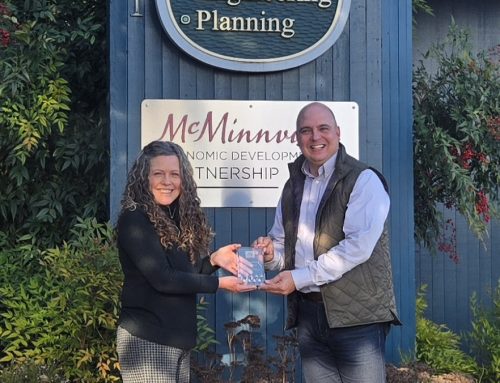
Earlier this month, I traveled to Washington, DC as part of a delegation advocating for federal infrastructure investment critical to McMinnville, Yamhill County, and rural Oregon.
We worked alongside local elected leaders and met with federal officials, congressional staff, and senior transportation agency leadership. The focus of every conversation was clear and consistent: completing long-standing, high-impact transportation projects—particularly the Newberg–Dundee Bypass—that directly affect safety, freight movement, workforce mobility, and regional economic competitiveness.
The Newberg–Dundee corridor remains one of the most significant transportation bottlenecks in the mid-Willamette Valley. While substantial progress has been made, the project’s full safety and economic benefits will not be realized until the remaining phases are completed. A central message we delivered was that Oregon’s state and local partners have already invested heavily, demonstrating commitment and readiness. Continued federal partnership is the key to finishing the job.
Across meetings with Oregon’s congressional delegation, White House intergovernmental staff, and officials at the U.S. Department of Transportation and Federal Highway Administration, there was strong recognition of the project’s importance and of the broad, bipartisan support behind it. While federal funding decisions take time, these conversations are an essential part of positioning the bypass competitively for future discretionary grants and infrastructure funding opportunities.
Infrastructure investment is not abstract for our business community. It affects how goods move, how employees commute, how emergency services respond, and how competitive our region is for future investment. We will continue sustained advocacy at the federal level to ensure rural Oregon’s priorities remain visible and well-supported.
Preparing for Oregon’s 2026 Legislative Short Session
At the same time, attention is turning to Salem. The Oregon Legislature convenes its 35-day short session on February 2, and the pace will be fast.
This session will be shaped by a constrained fiscal environment following recent federal tax changes and shifting revenue forecasts. As a result, lawmakers are expected to focus primarily on balancing the state budget, making targeted adjustments, and addressing time-sensitive issues rather than launching major new policy initiatives.
Transportation funding will be an important backdrop, particularly given ongoing uncertainty around recent transportation legislation and its referral to the ballot. In addition, tax policy discussions, workforce availability, housing production, and regulatory impacts on employers will remain key areas of focus.
Throughout the short session, the Chamber will closely monitor legislation affecting local businesses and will advocate for practical, predictable, and business-friendly policies that support economic vitality and long-term resilience in McMinnville and Yamhill County. We will also continue coordinating with regional chambers, economic development partners, and statewide advocacy organizations to ensure our community’s voice is heard in a compressed legislative timeline.
As always, we welcome member input on issues of concern and will provide timely updates as the session unfolds. Thank you for your continued engagement and trust as we work to advance policies that support a strong local economy.
John Olson
President & CEO